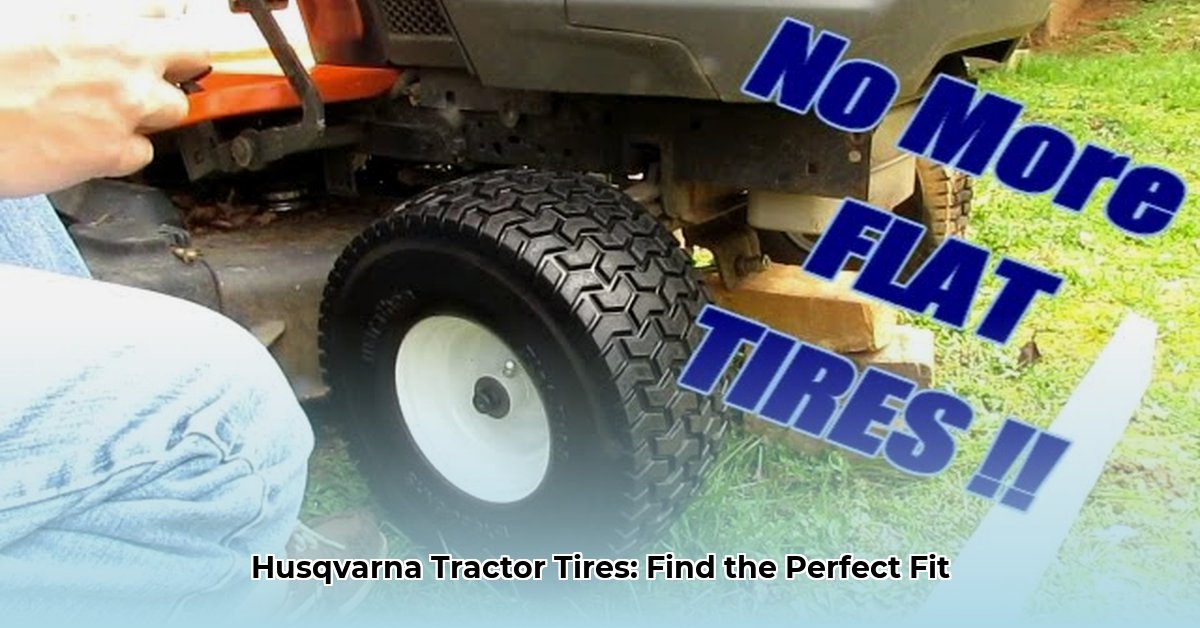
Husqvarna Tractor Tires: A Comprehensive Guide to Selection and Installation
Choosing the right tires for your Husqvarna lawn tractor is crucial for optimal performance, longevity, and maintaining your warranty. This guide provides a step-by-step process to help you select and, if you choose, install the perfect tires for your needs. Remember, the right tires translate to a smoother mowing experience, extended equipment lifespan, and a safer operation. For more information on specific tire sizes, check out this helpful resource on tractor tire sizes.
1. Identifying Your Husqvarna Model: The First Crucial Step
Before you delve into tire sizes and types, you must pinpoint your tractor's model number. This number acts as a key to unlocking the correct tire specifications. Typically, you'll find a sticker with this information under the seat or on the tractor's chassis. Take a clear photo of this sticker for easy reference later – this is a vital first step that most people overlook! Without it, selecting the appropriate tires becomes extremely challenging.
2. Understanding Tire Sizes and Types
Tire size codes (e.g., 18x8.50-8) might seem cryptic, but they're easily deciphered. The numbers represent the tire's diameter, width, and rim size. More importantly, consider the type of tire:
| Tire Type | Pros | Cons | Best Suited For |
|---|---|---|---|
| Turf Tires | Gentle on lawns, minimal ground disturbance, excellent grip on grass | Not ideal for rough terrain or slopes; poor traction on uneven surfaces | Perfectly manicured lawns, flat surfaces. |
| All-Terrain Tires | Good traction on various surfaces, versatile | Might leave slight marks on very delicate lawns | Lawns with some bumps, slightly uneven terrain. |
| Ribbed/Lug Tires | Durable, long-lasting, great for heavier loads | Can be less grippy on grass than turf tires | Frequent use, heavier loads, less perfectly maintained lawns. |
The type of tire you choose greatly depends on your lawn's condition. Do you have a perfectly manicured lawn, or is it more rugged? This critical decision ensures optimal performance and minimizes lawn damage.
3. OEM vs. Aftermarket Tires: Weighing Your Options
You have two main choices: Original Equipment Manufacturer (OEM) tires from Husqvarna, or aftermarket options. OEM tires guarantee a perfect fit, often offer superior performance, and maintain warranty coverage. However, they're usually more expensive. Aftermarket tires provide a more budget-friendly alternative, but require careful verification of compatibility with your model to avoid potential issues. Thoroughly research reviews before purchasing aftermarket tires to ensure quality. Do you prioritize price or guaranteed compatibility and performance?
4. Where to Buy Husqvarna Tractor Tires: Reputable Sources
Once you've determined your needs, purchasing your tires is straightforward. Reputable online retailers and local dealers specializing in lawn and garden equipment offer convenient options. Always double-check tire compatibility with your Husqvarna model before purchasing – don't rely on assumptions! A quick search online will show a plethora of suppliers to choose from. Ensuring compatibility is paramount!
5. Installing Your New Tires: DIY or Professional Installation?
While installing tires yourself might seem appealing, it’s a task best left to professionals unless you're experienced in machinery repair. Improper installation can damage your tractor and potentially void your warranty. Safety should always be a top priority. If you're unsure, a professional installation is always the wisest option. Is your time worth the risk?
6. Troubleshooting Common Tire Issues: Addressing Problems
Even with the right tires, issues can arise. Flat tires are easily fixed with a pump and proper inflation, using guidelines from your owner's manual. Uneven tire wear indicates potential alignment problems or improper inflation. Poor traction suggests worn treads or inappropriate tires for your terrain. Always consult a professional mechanic if you encounter problems beyond simple fixes. Preventative maintenance is key!
Key Takeaways:
- Matching tire size to your Husqvarna model is paramount for performance and safety.
- Understanding tire types and tread patterns is crucial for selecting the best fit for your needs.
- Choosing between OEM and aftermarket tires involves a cost-benefit analysis.
- Reputable sources for purchasing tires include authorized dealers and vetted online retailers.
- Prioritize safety when installing tires; professional help may be needed.
- Regular tire inspections help prevent significant problems and ensure safe operation.
Remember, the investment in the right tires pays off in smoother mowing, extended tractor life, and a safer experience. By following this guide, you can ensure your Husqvarna lawn tractor performs at its peak.